The Face That Remains
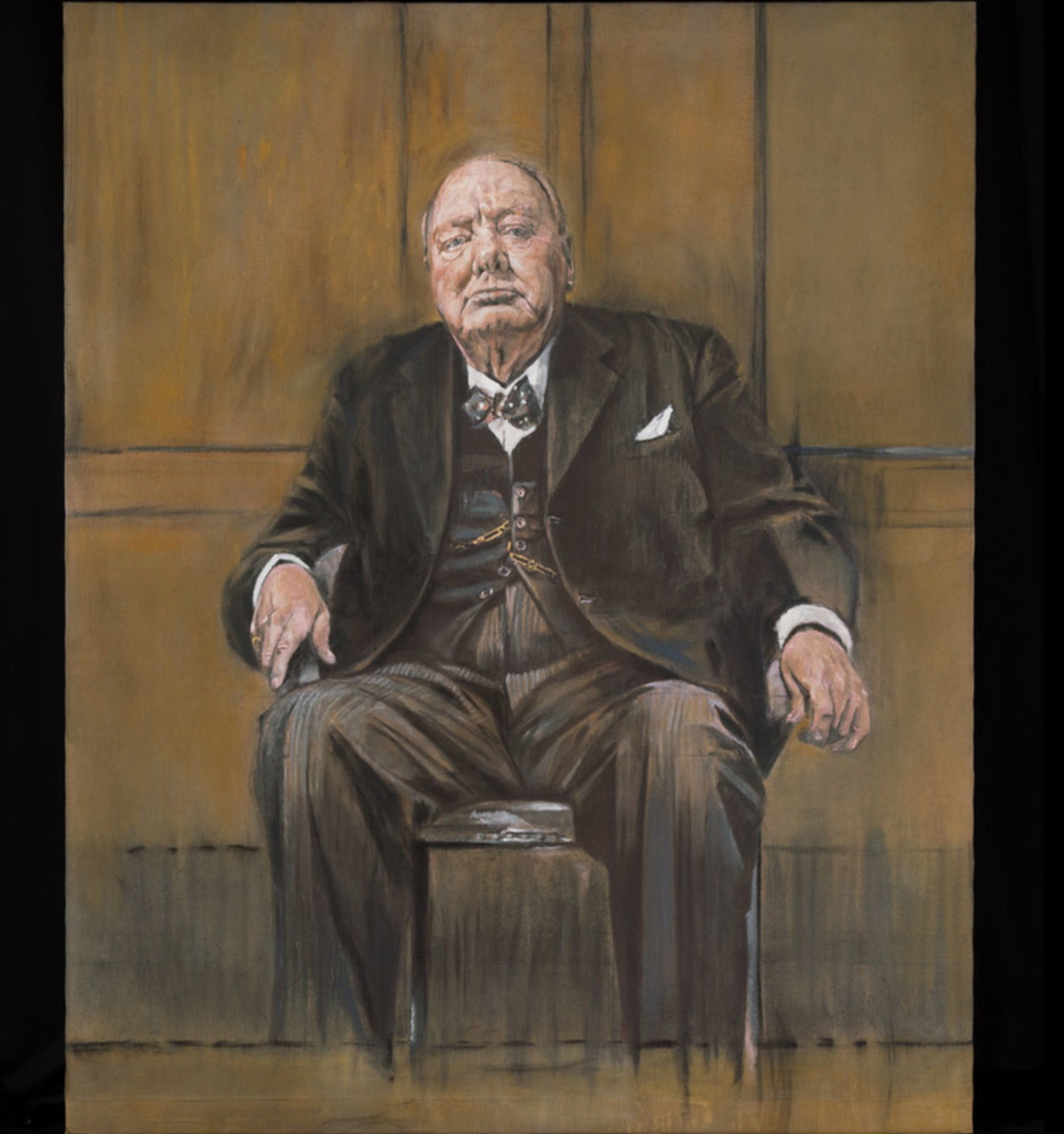
There is an uncomfortable honesty in Graham Sutherland's portrait of Winston Churchill. The image is almost startling in its refusal to flatter. Gone is the wartime statesman standing before history with a cigar in one hand and defiance in the other. Instead, Sutherland presents an elderly man seated quietly in a chair. His shoulders are heavy. His body bears the unmistakable weight of time. His face is lined by age. It is little wonder Churchill despised the painting.
Many have argued over whether Sutherland was fair to his subject. Some see the portrait as unnecessarily harsh, reducing one of history's most celebrated leaders to an old man nearing the end of his life. Yet I find myself returning to the painting for a different reason. It asks a question that extends far beyond Churchill himself.
How do we choose to meet our mortality when it becomes impossible to ignore?
At first glance, the portrait appears almost entirely concerned with decline. Churchill's body feels rooted to the chair beneath him. His shoulders sag under the accumulated weight of age and responsibility. There is none of the triumphant imagery history has come to associate with him. Sutherland offers no symbols of victory, no reminders of wartime speeches or political triumphs. Only a man who has lived long enough to understand that time eventually asks something of us all.
Yet the longer I spend with the painting, the less convinced I become that it is about decline alone.
It is Churchill's face that continues to draw me back. There is a quiet resolve in his expression that refuses to surrender to the limitations of his body. His eyes remain alert. His jaw is set. He does not appear to be denying his mortality, nor does he seem consumed by fear. Instead, he gives me the impression of a man saying something far more human:
I don't want to leave, but I am not afraid.
Perhaps that is why the portrait continues to endure. Beneath the wrinkles and the weight of old age lies something that time itself cannot seem to diminish. The painting becomes less about the body growing weaker and more about the quiet persistence of the human spirit when confronted with its own finitude.
Perhaps this is why Churchill rejected the portrait. We spend much of our lives constructing an image of ourselves through our accomplishments, our titles, and the roles we inhabit. Sutherland quietly strips each of them away. What remains is not the Prime Minister who rallied a nation through its darkest hour, but a man standing at the threshold of life's final chapter.
Yet there is something comforting in that realization.
If Sutherland had painted Churchill as an untouchable hero, the portrait would have belonged to history alone. Instead, he paints a man whose greatest battle is no longer against an enemy abroad, but against the same certainty that awaits each of us. The painting reminds us that mortality is the one certainty no amount of achievement, power, or recognition can postpone.
Perhaps the measure of a life is not found in how long we outrun death, but in how we choose to meet it when it finally comes into view. Churchill's expression suggests neither resignation nor denial. It reflects something quieter, and perhaps more courageous: a love for life that remains undiminished, accompanied by the resolve to face its ending without surrendering one's dignity.
In that sense, Sutherland's portrait is not simply about Winston Churchill. It is about every one of us.
Editor's Reflection
There are very few works of art that continue to occupy my thoughts long after I have experienced them. Graham Sutherland's portrait of Winston Churchill has become one of them. Not because it settles the question of how we ought to face the end of our lives, but because it quietly refuses to look away from it.
As I return to the portrait, I find myself spending less time looking at Churchill's age and more time looking into his expression. Each time I do, I come away with the same impression. It is the face of a man who still loves life, who is not yet ready to leave it, yet who is no longer afraid of its ending. There is a quiet dignity in that realization that I find deeply moving.
Perhaps that is the enduring gift of Sutherland's portrait. It reminds us that courage is not always found in moments of triumph or victory. Sometimes courage is found in the quiet resolve to remain fully human even as time asks us to let go.
If the portrait asks anything of us, it is this: when our own twilight years arrive, may we meet them with the same love for life, the same quiet dignity, and the same unwavering resolve reflected on Churchill's face.
Continue Reading
Issue One: What Does It Mean to Live Well?